Free printable train activities for preschoolers
A child who is genuinely obsessed with trains usually already knows more real train vocabulary than the adults around them, and a worksheet that treats trains as a generic cute picture undersells that interest.
Real parts, not a generic train shape
A train-obsessed preschooler often already knows the difference between a locomotive, a freight car, and a caboose, and an activity that uses the real names and real shapes respects that knowledge instead of flattening it into one generic train outline.
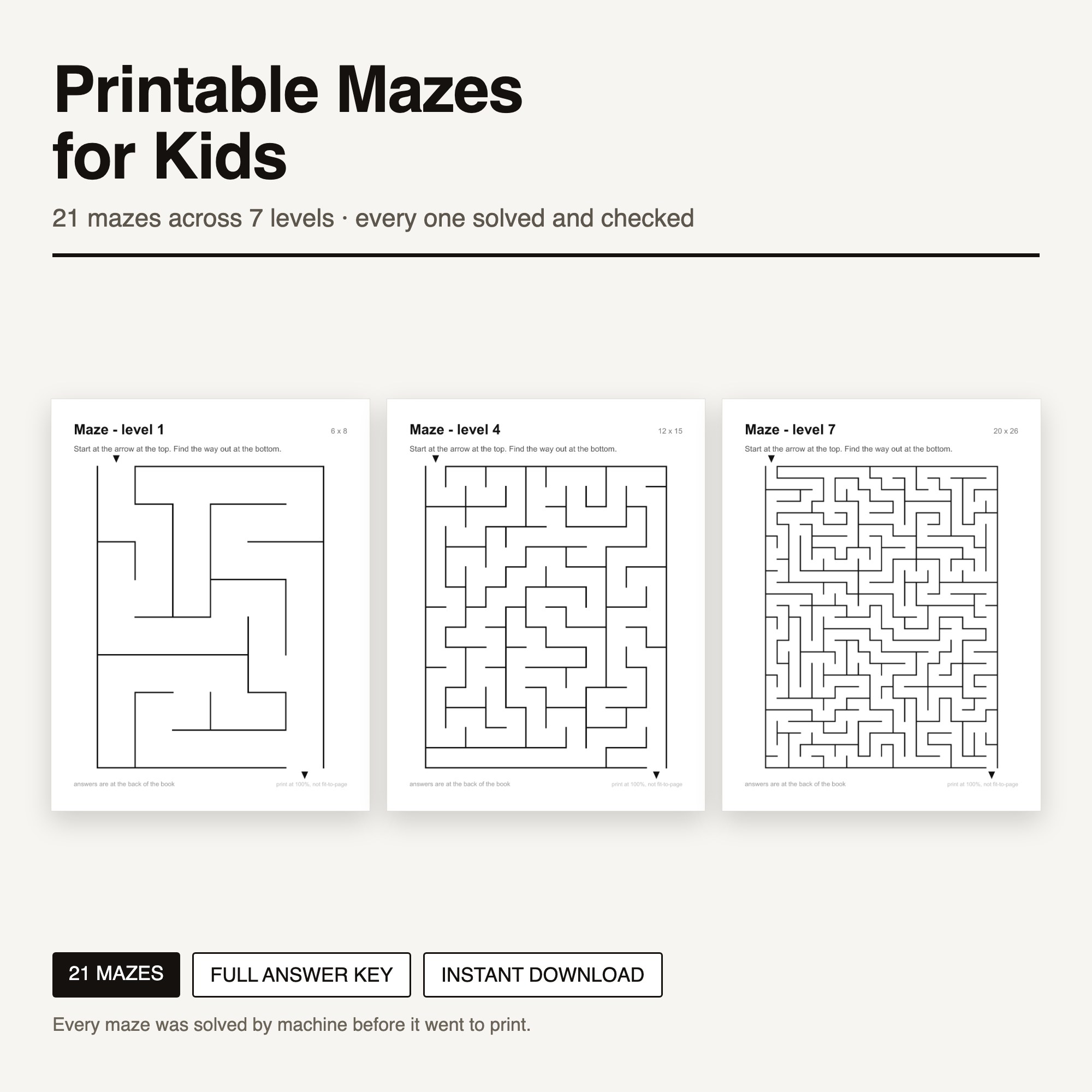
A maze that follows an actual track layout
A pencil maze shaped like train tracks — junctions, a loop, a station stop at the end — does double duty: it is genuine pencil-control practice dressed as exactly the thing they already love, which holds attention far longer than an unrelated maze shape.
Counting with train cars instead of generic objects
"How many cars in this train?" does the same counting work as any other counting worksheet, but a train-obsessed child will engage with it without needing to be convinced, because the counting is embedded in the interest rather than sitting next to it.
Matching parts to the whole
Matching a wheel, a smokestack, or a coupling to the correct spot on a train diagram builds observation skill and gives a genuinely obsessed child a chance to show off what they already know.
Extending the interest past the worksheet
A worksheet works best as one piece of a bigger week, not the whole thing: a real train book with photographs, a visit to a station or a model railway display, or watching a real train pass all extend the same interest in a way a printable alone cannot.
Questions people ask
My child already knows more about trains than the worksheet covers. Is it still worth doing?
Yes, if it is doing something specific — pencil control through a track-shaped maze, or counting practice with train cars — rather than trying to teach train facts a genuinely obsessed child likely already has.
Should the trains be cartoon-style or realistic?
A child with a real interest often prefers accurate shapes and real parts over a cartoon version, the same way a horse-obsessed child prefers a real horse anatomy over a stylized one.
What is the single best way to extend a train worksheet into something bigger?
Pairing it with something real — a photograph book, a nearby station visit, or watching an actual train — extends the interest further than another worksheet would.
Part of our guide to Preschool printables & gifts.