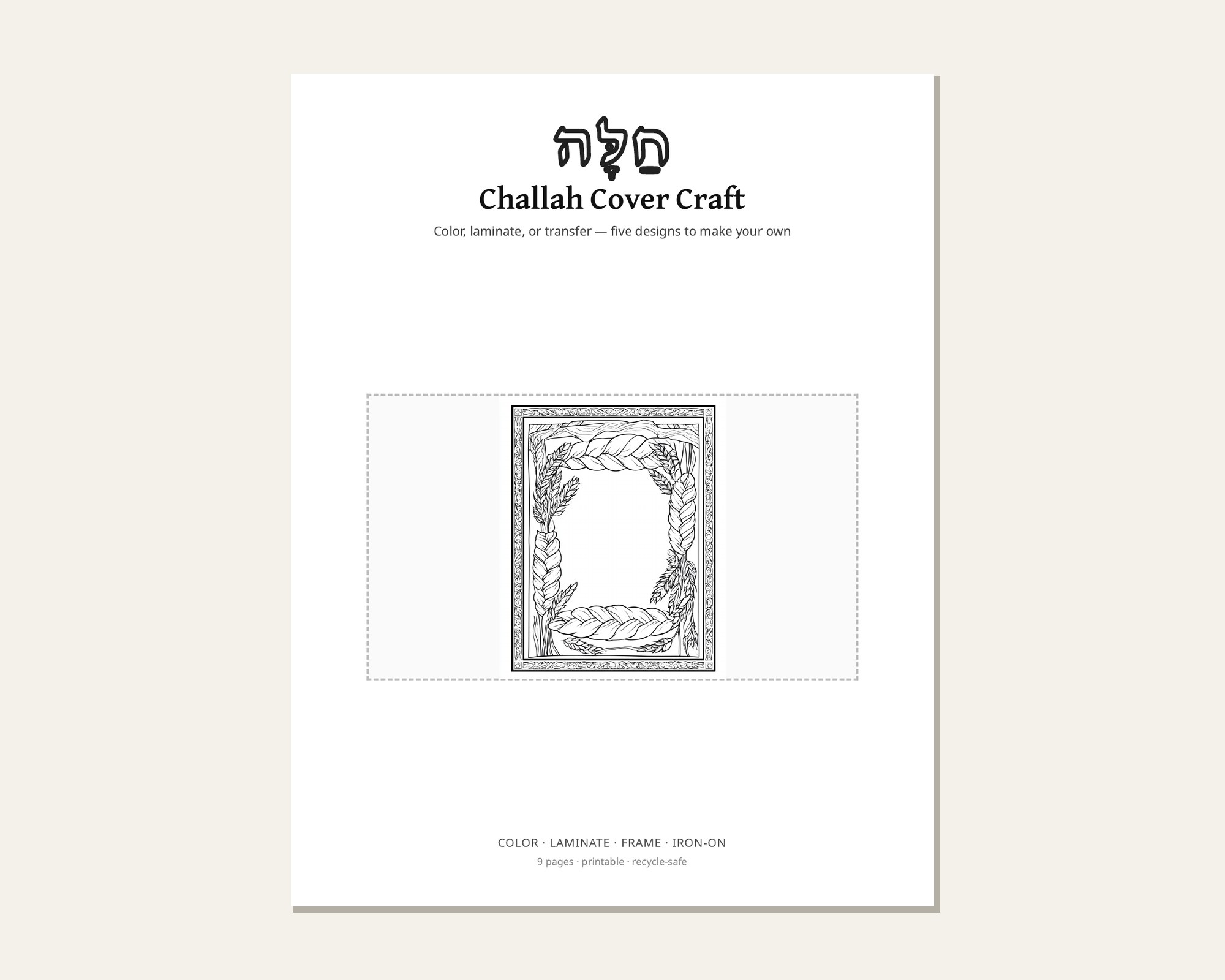
Make your own challah cover with the children
Of everything we have made, this is the one that sold first — and the reason is not the craft. It is that the thing gets used.
Why this one works when other crafts do not
Most children's crafts end in a drawer. This one goes on the table within days, in front of everyone, and stays there every week. A three-year-old who decorated it watches the challah all through dinner. That is not a craft outcome — it is belonging.
Paper or fabric
Paper is the honest starting point: print, colour, done, and make a new one whenever they want. Fabric lasts, needs fabric crayons or fabric pens and an adult to set them, and becomes the one on the table for years.
Start on paper. A child who has made six paper ones has decided what they want the real one to look like.
Let it be theirs
The temptation is to tidy it — straighten the lettering, improve the shape. Do not. The value of the object at the table is entirely that they made it, and a corrected one is no longer theirs.
Questions people ask
Does a challah cover have to have Hebrew on it?
Covers are commonly decorated with words or symbols, but we are not the ones to rule on what yours must carry. If a particular wording matters in your family or community, ask your rabbi — we would rather say that than invent a rule.
What age can do this?
Colouring one, from about two. Cutting and assembling, from four with help.
Will fabric crayons survive washing?
Follow the packet — most need heat-setting with an iron, and that is an adult step. We are not going to promise a result for a product we have not tested.
Part of our guide to Shabbat with young kids.